of food intake can be missing from manual food records.
Availability: Active
BiteRight
AI nutrition tracker and nutrition API
Nutrition guidance built around the person eating
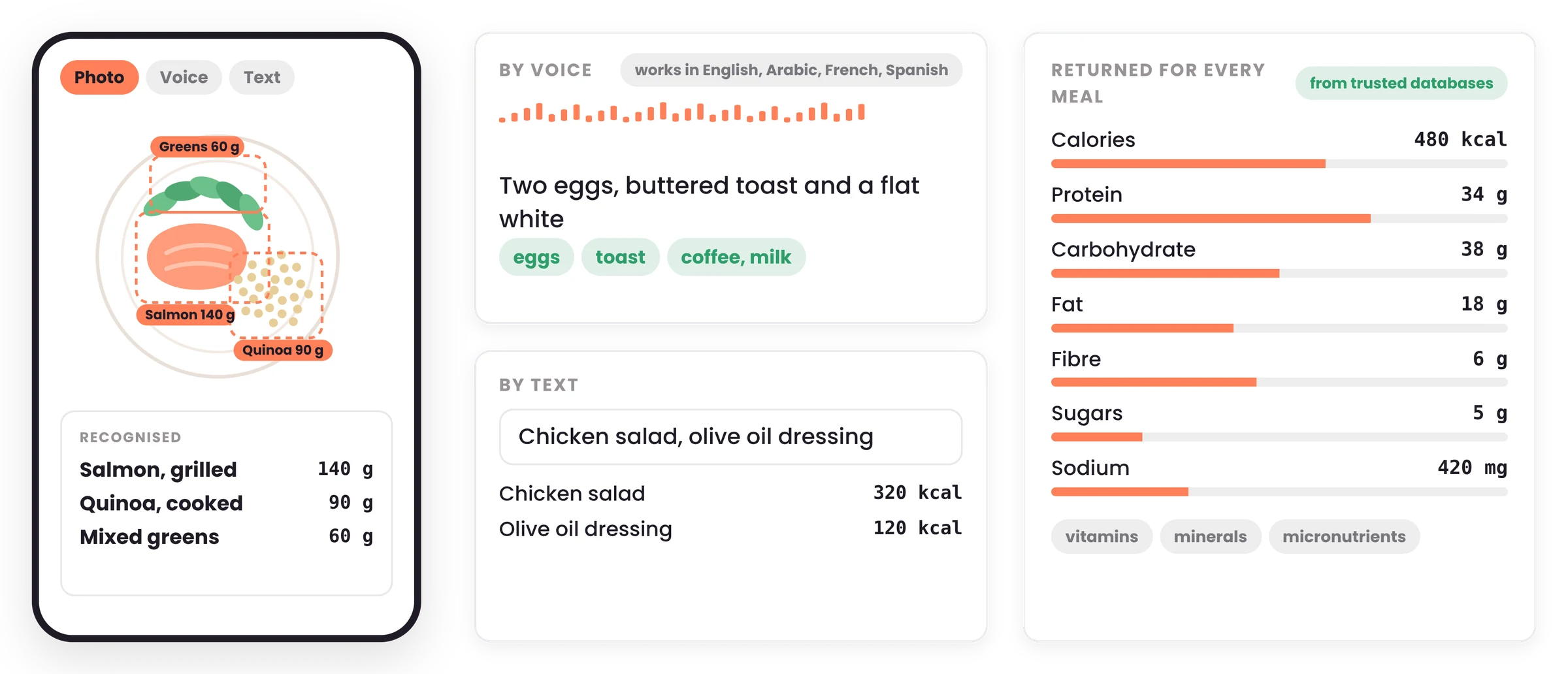
Log it any way
A photo, a voice note or a line of text becomes a full nutrient breakdown.
Checked against clinical guidance
Clinical nutrition rules for IBS, diabetes and cholesterol, with the evidence shown.
One API for health platforms
Add the same engine to your own product.
The problem it solves
Manual calorie counting is slow and often wrong, so most people stop.
And a food label can’t tell you what a meal means for your IBS, diabetes or cholesterol.
What it does
Log a meal
Snap a photo, say it or type it, and get a full nutrient breakdown.
Get guidance for your condition
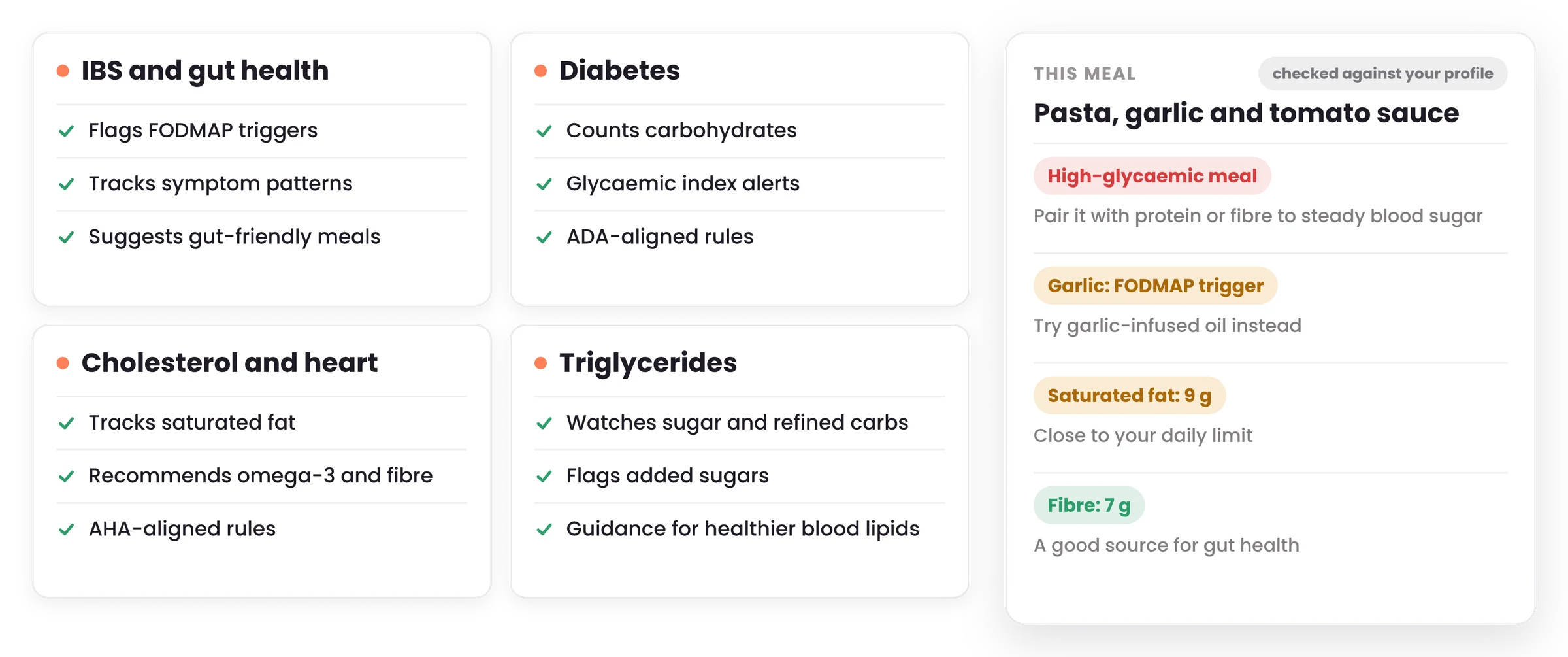
Meals are checked against rules for IBS, diabetes and cholesterol, with swaps suggested.
Ask NutriBot
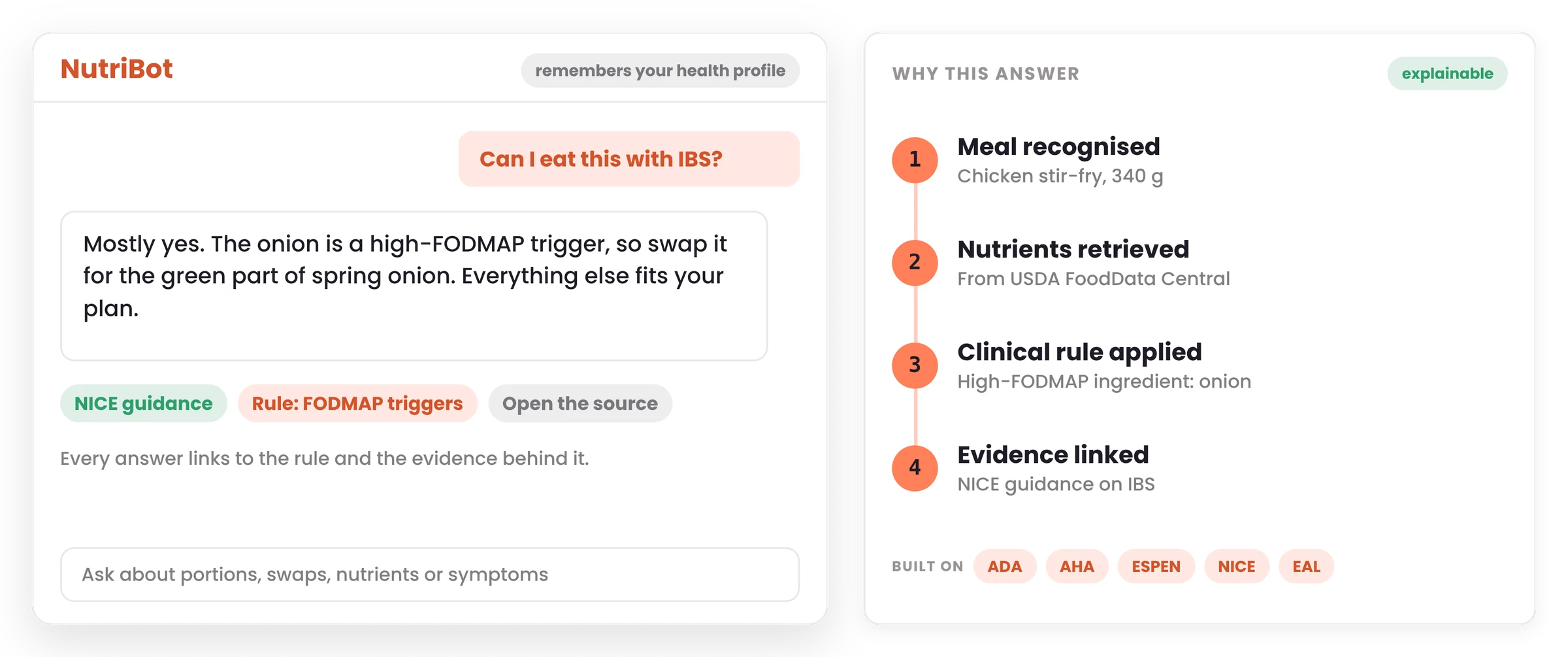
Ask about portions and swaps, and see the evidence behind each answer.
See your patterns
Daily and weekly summaries compare what you eat with your targets.
Eat out or cook in
Scan a menu, or photograph your fridge for recipes with full nutrition.
Who it’s for
People watching what they eat
Log meals and get guidance set to their condition.
Hospitals and insurers
Add food recognition and clinical rules to your own platform through one API.
Clinical trials and wellness apps
Embed nutrient analysis and explainable insights.
Why accurate food tracking matters
adults live with diabetes, and over 4 in 10 of them do not know it.
of people worldwide live with IBS under Rome III criteria, 3.8% under Rome IV.
Logging
Log a meal in seconds.
Manual calorie counting is slow and often wrong, so most people stop.
Snap a photo, say it, or type it: BiteRight’s AI recognises the foods, estimates portions and returns a full nutrient breakdown from trusted databases.
Condition guidance
Guidance set to your condition.
A food label can’t tell you what a meal means for your IBS, diabetes, or cholesterol.
BiteRight applies clinical nutrition rules to each logged meal. It flags FODMAP triggers, high-glycaemic dishes, saturated fat and added sugar, and suggests what to swap.
NutriBot and evidence
Answers with receipts.
Generic AI chatbots guess, and in health that isn’t good enough.
NutriBot grounds its answers in published guidelines and shows the trail behind each one: what was recognised, which data was used, which rule applied and the evidence it links to. You can see exactly why.
Patterns
See what your food is doing to you.
Single meals don’t show the pattern.
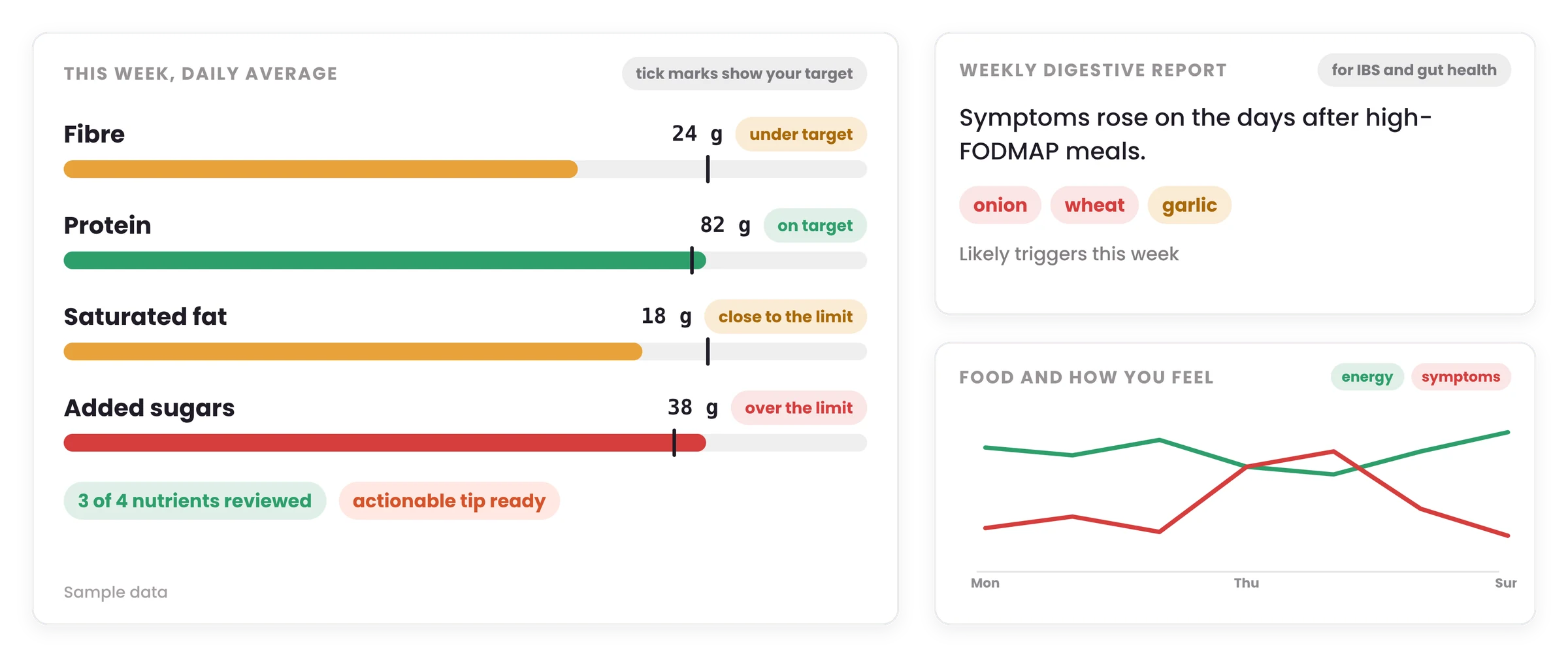
Daily and weekly summaries compare your intake with your targets, and the weekly digestive report links foods to symptoms and energy, so you can make gradual changes with evidence.
Real-life tools
Eating out, cooking in, asking anything.
Nutrition advice fails when life gets messy.
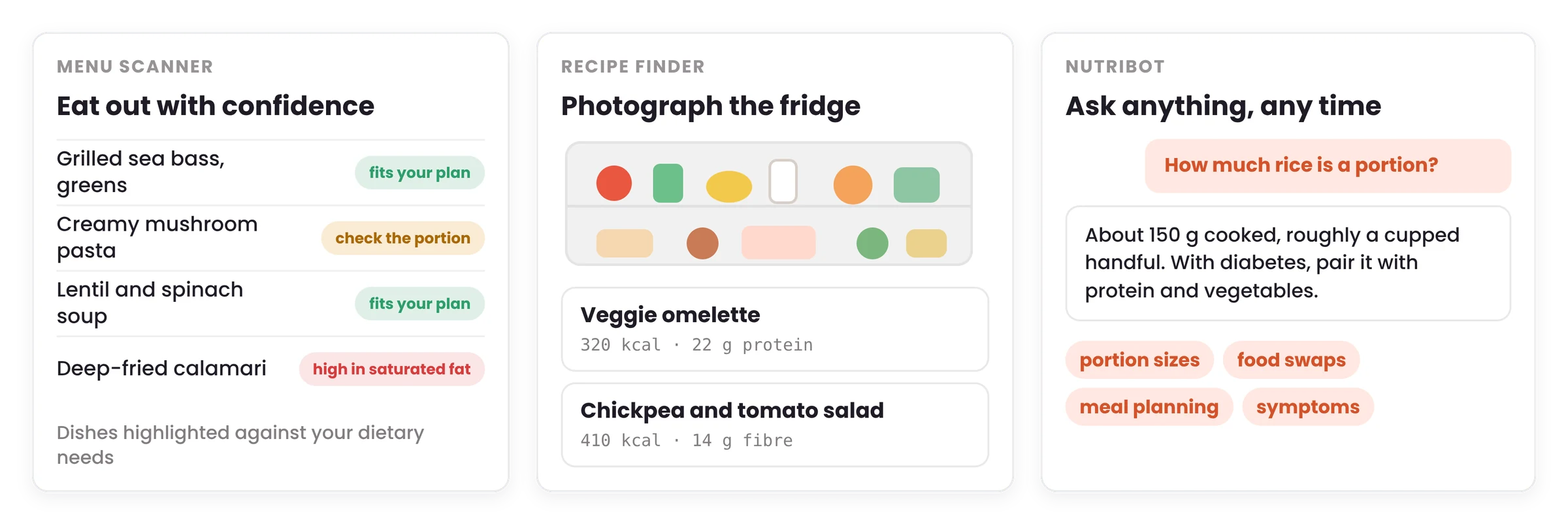
Scan a restaurant menu to see which dishes fit your plan, photograph your fridge for recipes with full nutrition, or ask NutriBot about portions and swaps. All three use your health profile.
Nutrition API
Nutrition intelligence for your platform.
Building clinical nutrition rules in-house means months of work, guideline expertise and compliance overhead.
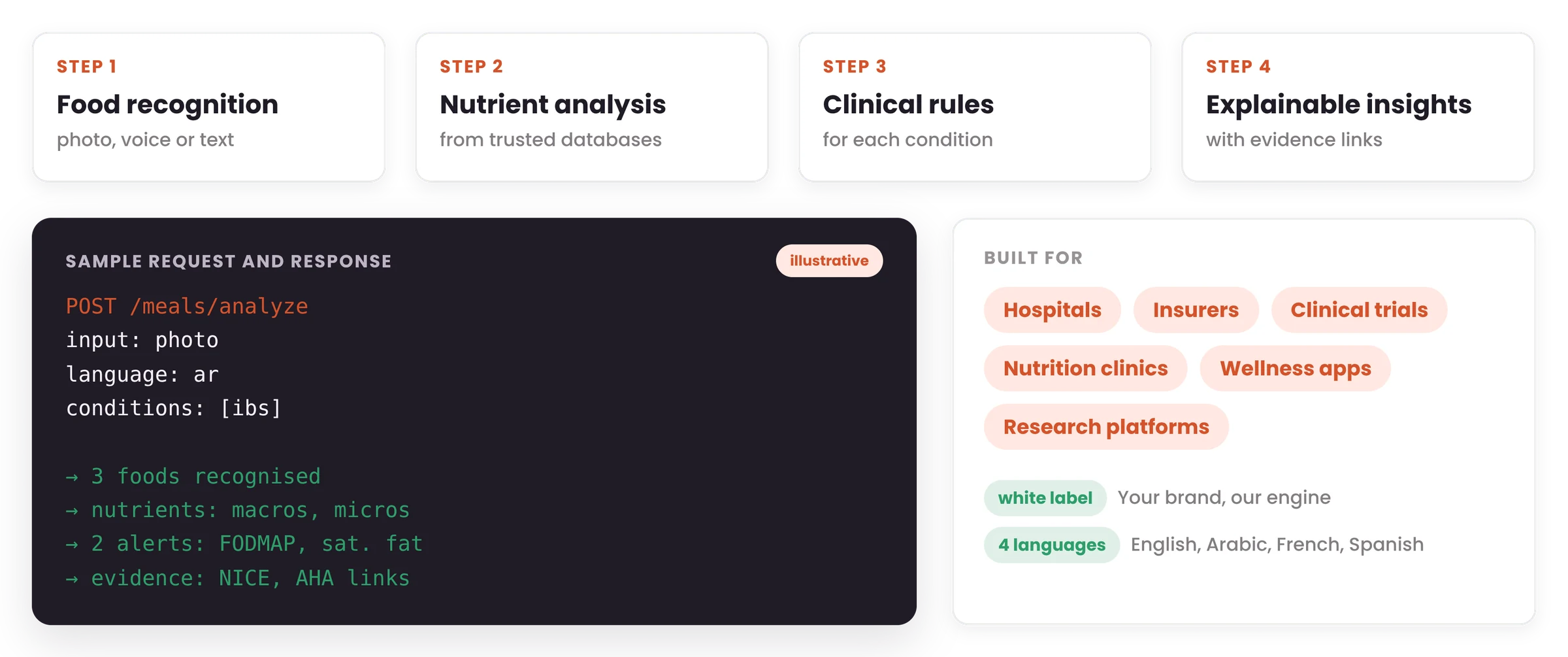
Hospitals, insurers, clinical trials and wellness apps can embed BiteRight through one API: food recognition, nutrient analysis, clinical rules and explainable insights, with regional hosting.
BiteRight: your pocket nutritionist, built to be audited.
Sources: IDF Diabetes Atlas, 11th edition, 2025; Oka et al., Lancet Gastroenterology & Hepatology, 2020; Schoeller, Metabolism, 1995; IBM Cost of a Data Breach Report, 2025.